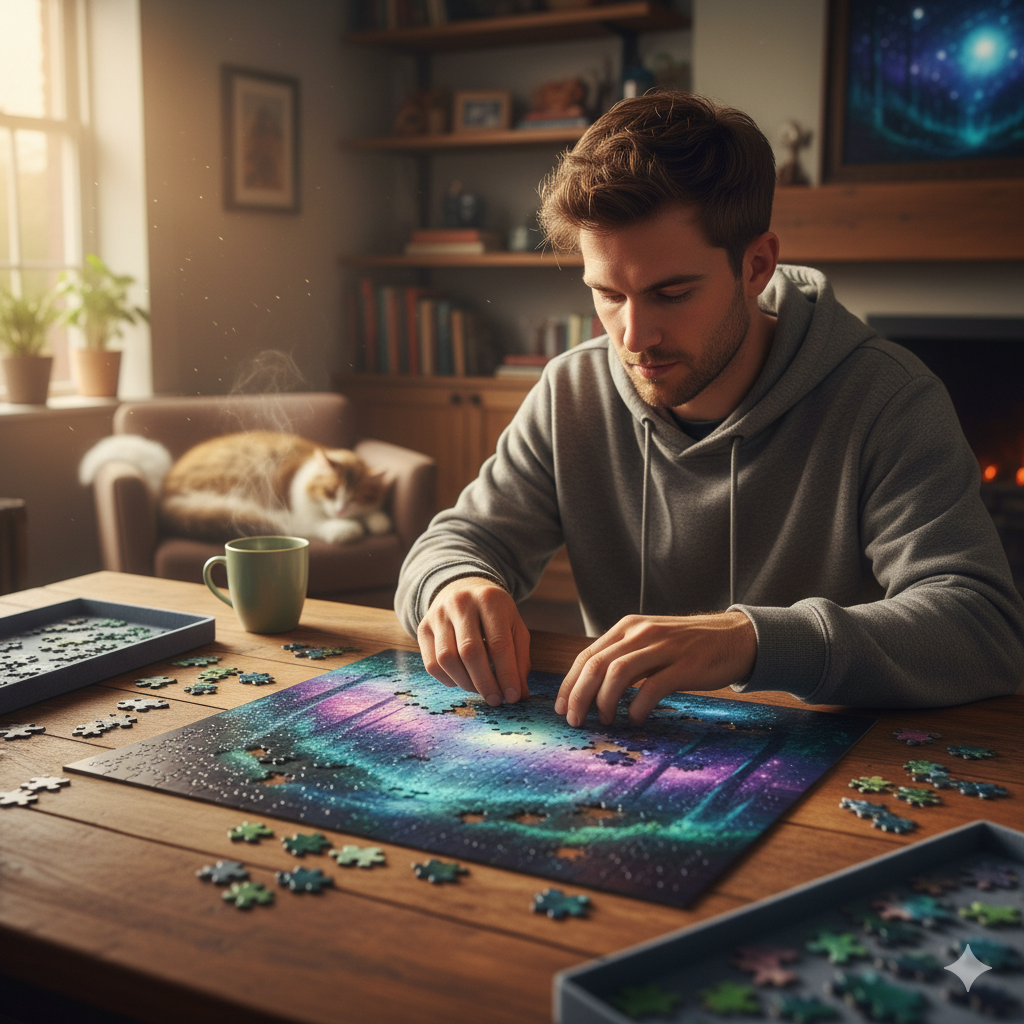
Jigsaw Puzzles: A Focus Tool for ADHD
If you or someone you love has ADHD, finding natural and effective ways to stay focused can feel like an ongoing challenge. Interestingly, one of the simplest tools — jigsaw puzzles — can make a big difference. Puzzles engage the ADHD brain in a way that promotes calm, concentration, and satisfaction without the need for screens or complex strategies.
💡 Why Jigsaw Puzzles Work for ADHD Brains
People with ADHD often find it difficult to maintain focus on tasks that are repetitive or lack stimulation. Jigsaw puzzles provide just the right level of mental engagement — they’re challenging but not overwhelming.
🧘♀️ 1. Puzzles Promote Calm and Mindfulness
Working on a puzzle helps ADHD minds enter a state of flow — a focused yet relaxed mental state where time seems to slow down. This mindfulness effect reduces stress, quiets racing thoughts, and promotes a sense of calm.
It’s an ideal way to practice natural ADHD focus training without medication or digital distractions.
🔍 2. Strengthening Attention Span and Concentration
ADHD often makes it difficult to sustain attention, but puzzles build focus in small, rewarding bursts. Each piece found provides instant feedback and satisfaction, releasing dopamine — the same brain chemical that drives motivation.
Over time, this positive reinforcement improves sustained attention, patience, and mental stamina.
🎯 3. Developing Problem-Solving and Executive Function Skills
Every puzzle is a visual problem to solve. You have to plan, organize, and test ideas — all key aspects of executive functioning. These cognitive processes are often weaker in ADHD, and puzzles strengthen them in a fun, pressure-free environment.
This makes puzzles a valuable brain training tool for ADHD adults and children alike.
🧩 4. A Screen-Free Reset for ADHD Overstimulation
Puzzles give the ADHD brain a much-needed break from overstimulation caused by phones, games, and constant notifications. They provide hands-on engagement that satisfies sensory and mental needs without increasing hyperactivity or anxiety.
The tactile feedback of placing each piece helps ground attention in the present moment — something digital tasks rarely offer.
👨👩👧 5. Puzzles Build Connection and Positive Focus at Home
For families of children with ADHD, solving puzzles together encourages teamwork, communication, and emotional bonding. It’s a calm, cooperative activity that helps kids learn patience while boosting their confidence and sense of achievement.
💜 The Takeaway
For anyone with ADHD, jigsaw puzzles are more than a hobby — they’re a natural focus tool that improves concentration, problem-solving, and emotional balance.
Whether you’re managing ADHD as an adult or supporting a child, try setting aside a few minutes a day for puzzling. Piece by piece, you’ll notice calmer energy, sharper focus, and a greater sense of control — no screens or stress required.
We, at RENT A PUZZLE offer a huge collection of jigsaw puzzles that you can order to be delivered to your DOORSTEP.